
You turn on the bathroom faucet and the sink drains slowly. A few hours later, the toilet gurgles. Then someone starts the washing machine and water rises through the shower drain. At that point, you are probably dealing with more than one clogged drain.
The important question is where the blockage sits. A small clog close to one fixture is usually a straightforward clogged drain repair. When several fixtures react at the same time, the problem may be farther downstream in the branch piping or main sewer lateral.
That distinction matters. Sewage backups can damage flooring, drywall, cabinets, furniture, and personal belongings. They can also expose your family to untreated wastewater. In 2026, Austin homeowners also have local programs and wastewater rules worth knowing if a private sewer lateral turns out to be defective.
This guide will help you read the warning signs before another flush or laundry cycle makes the situation worse.
One clogged drain usually points to a blockage near that fixture. If several drains slow down together, the toilet gurgles when another fixture runs, or wastewater appears in a tub or shower, the blockage may be in the main sewer line. Stop using water if sewage begins backing up. A licensed plumber can use drain cleaning equipment and a sewer camera when needed to identify the blockage and determine whether you need cleaning or pipe repair.
What a Clogged Drain Really Means
A clogged drain simply means wastewater cannot move through a pipe at its normal rate. The location of the blockage determines whether you have a small fixture problem or something much larger.
Fixture clog
A fixture clog affects one sink, tub, shower, or toilet. Bathroom drains often collect hair and soap residue. Kitchen drains commonly collect grease and food debris.
If every other fixture works normally, the clogged drain is probably close to the affected fixture.
Branch drain clog
A branch drain carries wastewater from several nearby fixtures toward a larger line. If the bathroom sink, bathtub, and toilet all drain poorly but the kitchen works normally, the blockage may be in a bathroom branch.
Main sewer line blockage
The sewer lateral is the pipe that carries wastewater from your home toward the municipal sewer. A blockage here can affect fixtures throughout the house.
Austin Water specifically identifies fats, oils, grease, disposable wipes, and feminine hygiene products as common causes of wastewater obstructions. The utility warns that a blockage can force wastewater back through a drain, cleanout, or other opening.
Other causes include:
- Tree roots entering cracked pipe joints
- Broken or deteriorated sewer pipe
- A sag, sometimes called a belly, where waste collects
- Heavy scale or sludge buildup
- Foreign objects
- Misaligned pipe sections
Pro Tip: Clearing a hole through a blockage and cleaning the pipe are not always the same job. If your clogged drain keeps returning, ask why before paying for the same temporary fix again.
The next clue is how the rest of your plumbing behaves.
Warning Signs a Clogged Drain Is Becoming a Sewer Problem
A main sewer blockage usually gives you more than one symptom. The trick is noticing the pattern.
Watch for these warning signs:
- Several drains slow down together. A kitchen sink plus a shower plus a toilet usually points farther downstream than one fixture.
- The toilet gurgles when another fixture runs. Air gets displaced when wastewater struggles to move through a restricted pipe.
- Water rises in the shower when you flush. This is one of the clearest signs that wastewater is finding another exit.
- The lowest drain backs up first. Ground-floor showers and floor drains often show trouble before fixtures located higher in the home.
- You smell sewage near drains or a cleanout. A cleanout is an access opening plumbers use to reach the sewer line.
- The clog returns days or weeks after cleaning. Repeat clogged drain repair may indicate roots, grease, a damaged line, or inadequate cleaning.
- The yard becomes unusually wet or green near the sewer route. A defective private lateral can leak wastewater into surrounding soil.
EPA says sanitary sewer overflows can enter homes, cause property damage, contaminate water, and threaten public health. The agency estimates at least 23,000 to 75,000 sanitary sewer overflows occur each year in the United States, excluding sewage backups inside buildings.
Warning: If sewage is coming through a shower, tub, toilet, or floor drain, stop running water. Do not start another laundry load or dishwasher cycle to “see if it clears.”
Once those warning signs appear, waiting can turn a plumbing bill into a restoration bill.
What Happens If You Ignore a Recurring Clogged Drain
A slow drain does not always become an emergency overnight. But a recurring clogged drain is telling you that the underlying restriction has not been solved.
The first consequence is usually inconvenience. The sink drains slower. The toilet becomes unpredictable. Eventually, more fixtures begin reacting.
Then the costs can escalate.
A basic clogged drain repair may cost a few hundred dollars. A sewer backup that reaches flooring, drywall, cabinetry, rugs, or furniture creates a second project involving sanitation and restoration.
Raw sewage carries biological contaminants. EPA notes that sanitary sewer overflows can pose public health risks, while CDC guidance advises avoiding contact with water contaminated by sewage.
The pipe itself may also deteriorate while you wait. Tree roots entering a small joint opening can grow inside the line. Grease can continue collecting on pipe walls. A cracked lateral can allow groundwater into the sewer system.
Austin Water considers private sewer laterals important enough to maintain a dedicated Private Lateral Program. The city investigates certain blockages and wastewater overflows on private property and identifies defects that need repair.
Common mistakes that make matters worse include:
- Repeatedly using corrosive chemical drain cleaner
- Treating every recurring clog with the same small snake
- Ignoring gurgling toilets
- Flushing wipes labeled “flushable”
- Pouring cooking grease into a disposal
- Continuing to use water during a sewer backup
Plumber’s Advice: If a clogged drain returns after professional cleaning, ask whether a camera inspection makes sense. The goal is to understand why the blockage returned.
That does not mean every clog requires a plumber. Some problems are safe to try yourself.
DIY Drain Clearing vs. Hiring a Licensed Plumber
There is nothing wrong with using a plunger on a basic clogged drain. The key is knowing when the problem has moved beyond basic homeowner maintenance.
What You Can Handle
For one isolated drain, you can safely try:
- Remove visible debris. Pull hair from a shower strainer or clean food buildup from a sink stopper.
- Use the correct plunger. A cup plunger works well on sinks. A flange-style plunger is better for toilets.
- Clean a removable trap if you know how. The P-trap is the curved section beneath a sink that holds water to block sewer gases.
- Stop putting grease and wipes down drains. Prevention matters more than another bottle of cleaner.
Austin Water tells customers to flush only human waste and toilet paper. Items such as wipes can clog household pipes and contribute to sewer problems.
When You Must Call a Pro
Call a licensed plumber when:
- Several fixtures are affected
- Sewage is backing up
- A clogged drain repeatedly returns
- You suspect tree roots
- The main cleanout is overflowing
- The line may be cracked or collapsed
- Hydro jetting or sewer camera inspection is needed
Texas homeowners can verify a plumber through the Texas State Board of Plumbing Examiners. The Board recommends confirming the Responsible Master Plumber license and Certificate of Insurance, checking local permit requirements, and getting estimates and warranties in writing.
Do Not Do This: Never mix chemical drain cleaners. Tell your plumber if you already poured chemicals into the clogged drain.
If you are already seeing multiple drains back up, O & M Plumbing offers 24/7 emergency drain service throughout the Austin area. Call (512) 607-7462 and explain which fixtures are affected so the plumber knows whether the problem sounds local or sewer-related.
How Professional Drain Cleaning Works
Good drain cleaning starts with diagnosis. A plumber should not automatically reach for the biggest machine.
O & M Plumbing lists drain snaking, auguring, hydro jetting, camera inspection, line locating, hydrostatic testing, leak detection, and plumbing diagnosis among its drain services.
Here is what a typical visit may involve:
- Describe the symptoms, 5 to 10 minutes. The plumber asks which fixtures are affected and when the problem started.
- Test fixtures, 10 to 20 minutes. Running controlled amounts of water can help narrow down the clog location.
- Locate the cleanout, 5 to 20 minutes. The plumber looks for safe access to the branch or main line.
- Choose the cleaning method, 5 minutes. A cable machine or auger may handle a basic clog. Hydro jetting may be better for heavy grease or sludge.
- Clear the blockage, 30 to 90 minutes or more. Timing depends on location, access, roots, debris, and pipe condition.
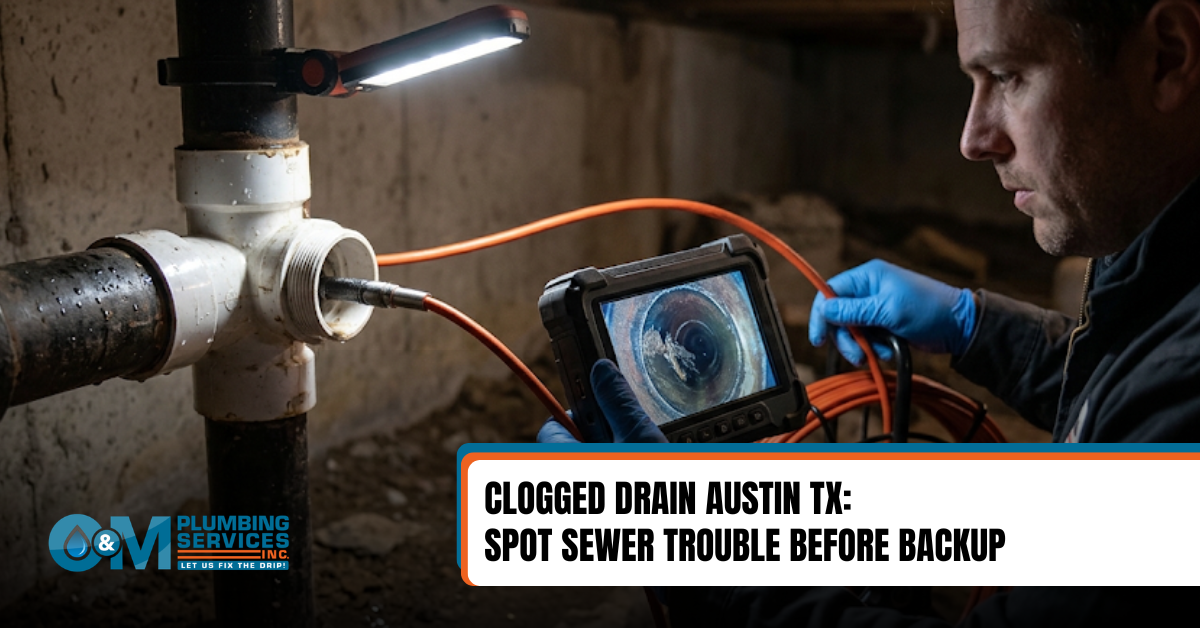
- Use a sewer camera when needed, 20 to 60 minutes. A camera can reveal roots, cracks, corrosion, offsets, and bellies.
- Test the drainage, 10 to 20 minutes. Multiple fixtures may be run to confirm proper flow.
- Explain the cause and next step, 10 to 15 minutes. You should understand whether the clogged drain is cleared or whether pipe repair is recommended.
Hydro jetting uses high-pressure water to scour buildup from pipe walls. It can be effective, but it is not appropriate for every deteriorated pipe.
Pro Tip: Ask to see camera footage when a plumber recommends major sewer repair. You should understand what is wrong before approving a large project.
The next question homeowners usually ask is simple: What will it cost?
Drain Cleaning and Clogged Drain Repair Cost in Austin for 2026
Drain cleaning prices depend on where the clog is, how difficult the pipe is to access, and which equipment solves the problem.
Price factors include:
- Number of affected fixtures
- Main-line versus fixture clog
- Accessibility of the cleanout
- Tree root intrusion
- Camera inspection needs
- Pipe damage
- Emergency versus scheduled service
- Repair work after cleaning
A legitimate estimate should explain labor, equipment, repair assumptions, cleanup, and warranty terms. The Texas plumbing board also recommends written estimates and warranties.
Avoid unusually low quotes that do not explain what is included. The cheapest drain cleaning near me result is not a bargain if the clogged drain returns next week.
O & M Plumbing Services emphasizes clear, competitive drain pricing and offers financing options for larger qualifying plumbing projects. An in-home assessment remains the best way to get an accurate number.
How to Choose the Right Drain Plumber in Austin
A plumber who can open a clogged drain is useful. A plumber who can tell you why it is clogged, is more valuable.
Start with the license. In Texas, ask for the Responsible Master Plumber number and verify it with the Texas State Board of Plumbing Examiners.
Before hiring, ask:
- Do you offer sewer camera inspection?
- Do you have small, medium, and main-line drain equipment?
- Do you offer hydro jetting when appropriate?
- Will you explain what caused the clog?
- Can I see camera footage before approving sewer repair?
- What does the estimate include?
- What warranty applies to the cleaning or repair?
- Do you provide emergency drain service?
Memberships and certifications can add trust, but verify them. If a company advertises PHCC membership or BBB accreditation, check that the status is current. The same applies to manufacturer credentials.
Reviews also tell you more when they are specific. On Google, Yelp, and Nextdoor, look for customers who describe the problem, technician communication, cleanup, price transparency, and whether the repair lasted.
Local experience matters too. A company providing drain cleaning Pflugerville TX homeowners use regularly is likely to recognize local pipe materials, subdivisions, soil conditions, and common sewer layouts faster than a remote call center.
O & M Plumbing Services has served the Austin metro since 2011 and provides emergency drain cleaning, snaking, auguring, hydro jetting, camera inspection, and plumbing diagnosis.
Once you find a plumber you trust, preventive maintenance can help reduce the chances of another emergency.
Seasonal Sewer Problems and Preventive Drain Maintenance
Austin gets roughly 35.5 inches of rain in an average year. The National Weather Service identifies May, October, and June as Austin’s wettest months, in that order.
Rain does not magically clog a healthy indoor drain. However, saturated soil and groundwater can expose defects in cracked or damaged private sewer laterals. EPA lists stormwater and groundwater entering defective sewers as one contributor to sanitary sewer overflow problems.
Tree roots matter too. Roots seek moisture and can enter small openings in damaged sewer pipe. Once inside, they can catch paper and waste until a partial restriction becomes a complete blockage.
Use this homeowner checklist:
- Keep cooking grease out of sinks
- Flush only toilet paper and human waste
- Clean hair from shower strainers
- Pay attention to recurring gurgling
- Locate your exterior sewer cleanout
- Schedule inspection after repeat main-line clogs
- Ask whether camera inspection is useful before hydro jetting
- Keep records of past drain cleaning and sewer repairs
Preventive drain cleaning is not necessary on the same schedule for every home. A newer home with no history of clogs may need little intervention. A property with mature trees and repeat sewer trouble deserves closer monitoring.
If your clogged drain seems to appear after periods of heavy rain, tell the plumber. That detail may point toward an infiltration or lateral defect rather than an ordinary hair or grease clog.
Austin homeowners also have some unusual local resources if the problem turns out to involve the private sewer lateral.
Local Sewer Factors Across Austin and Nearby Communities
The Austin metro covers very different neighborhoods, soils, elevations, utilities, and housing ages. That is why drain service Buda homeowners need may not look exactly like drain cleaning Pflugerville work or a sewer repair in West Lake Hills.
O & M Plumbing serves Austin, Bee Cave, Buda, Cedar Park, Georgetown, Hutto, Lakeway, Leander, Manor, Pflugerville, Round Rock, Taylor, and West Lake Hills.
For Austin Water customers, knowing who owns which pipe matters. A private lateral connects the building to the city wastewater system. Austin Water investigates certain private lateral blockages and overflows and can identify conditions that require repair.
Austin also maintains a Private Lateral Grant Program. As of 2026, Austin Housing says eligible Austin Water customers in single-family homes or duplexes may receive free private lateral repair or replacement if household income falls at or below 100 percent of the area Median Family Income and other eligibility rules are met.
Austin Water states that private laterals generally need positive slope toward disposal and identifies defects such as root intrusion, deterioration, misalignment, and sags as concerns.
That is important because a recurring clogged drain is not always something that should simply be cleaned again. If the pipe itself is defective, permanent repair may be the better investment.
Homeowners Also Ask About Clogged Drains
How do you tell if a clog is in the main sewer line?
Look for several fixtures acting up together. Common signs include toilets gurgling when sinks drain, shower water rising after a toilet flush, and the lowest drain in the house backing up. A single clogged drain usually points to a local blockage. Multiple connected symptoms make a main-line problem more likely.
Can a clogged drain clear itself?
A small amount of soft debris may move, but homeowners should not count on a recurring clogged drain fixing itself. Grease, hair, roots, wipes, scale, and damaged sewer pipes usually remain until they are mechanically cleared or repaired. If the drain temporarily improves and then slows again, the restriction probably still exists.
Should I snake a drain or use hydro jetting?
Snaking is often appropriate for a simple blockage. Hydro jetting uses high-pressure water to clean buildup from more of the pipe wall and may be useful for grease or sludge. Pipe condition matters. A plumber may recommend camera inspection first if an older sewer line could be cracked or deteriorated.
Why does my toilet gurgle when the shower drains?
The drain system needs air to move wastewater properly. A partial blockage can trap or redirect that air, which may cause bubbling or gurgling in nearby toilets. If the toilet gurgles whenever another fixture runs, schedule drain cleaning before the restriction becomes a complete backup.
Who should I call if sewage is backing up in Austin?
Stop using water first. For a suspected private plumbing blockage, call a licensed plumber for emergency drain service. Austin Water also provides 24-hour wastewater emergency support at 512-972-1000 when a city wastewater issue may be involved. Avoid direct contact with sewage.
Frequently Asked Questions
Q: How long does professional drain cleaning take?
A: Many straightforward clogs can be cleared in 30 to 90 minutes. Main-line blockages, tree roots, heavy grease, poor access, or camera inspection may take longer. A good plumber should diagnose the affected fixtures first instead of promising an exact time before seeing the plumbing.
Q: Does every recurring clog mean I need sewer replacement?
A: No. Recurring clogs may result from grease, roots, scale, wipes, or incomplete cleaning. Sewer replacement becomes more likely when camera inspection reveals collapsed pipe, serious cracking, severe offsets, or other structural defects. Ask to see evidence before approving replacement.
Q: Do I need a licensed plumber for sewer work in Texas?
A: Significant drain and sewer repairs should be handled by a properly licensed plumbing professional. Verify the company’s Responsible Master Plumber through the Texas State Board of Plumbing Examiners. The Board also recommends confirming insurance status and getting estimates and warranty terms in writing.
Q: Does O & M Plumbing provide emergency drain service?
A: Yes. O & M Plumbing provides 24/7 emergency drain service along with drain snaking, auguring, hydro jetting, camera inspection, line locating, leak detection, and plumbing diagnosis. The company serves Pflugerville, Austin, and surrounding Central Texas communities.
Q: What should I do before the plumber arrives?
A: Stop using affected fixtures if water is backing up. If several drains are involved, avoid toilets, showers, washing machines, and dishwashers until the line is assessed. Move belongings away from backup areas and tell the plumber about any chemical drain cleaners you used.
Stop the Backup Before It Reaches Your Floors
One clogged drain is frustrating. Several drains gurgling, slowing, and backing up together are your warning that the problem may be deeper in the system.
O & M Plumbing Services, Inc. provides clogged drain repair, drain cleaning, sewer diagnosis, hydro jetting, and camera inspection throughout Austin, Pflugerville, Cedar Park, Leander, Round Rock, Buda, Hutto, Georgetown, Bee Cave, Lakeway, Manor, Taylor, and West Lake Hills.
Call (512) 607-7462 for drain cleaning or emergency drain service, O & M Plumbing Services holds Texas Master Plumbing License M-41688, has been serving the Austin area since 2011, and emphasizes clear pricing, professional diagnosis, and local service.