
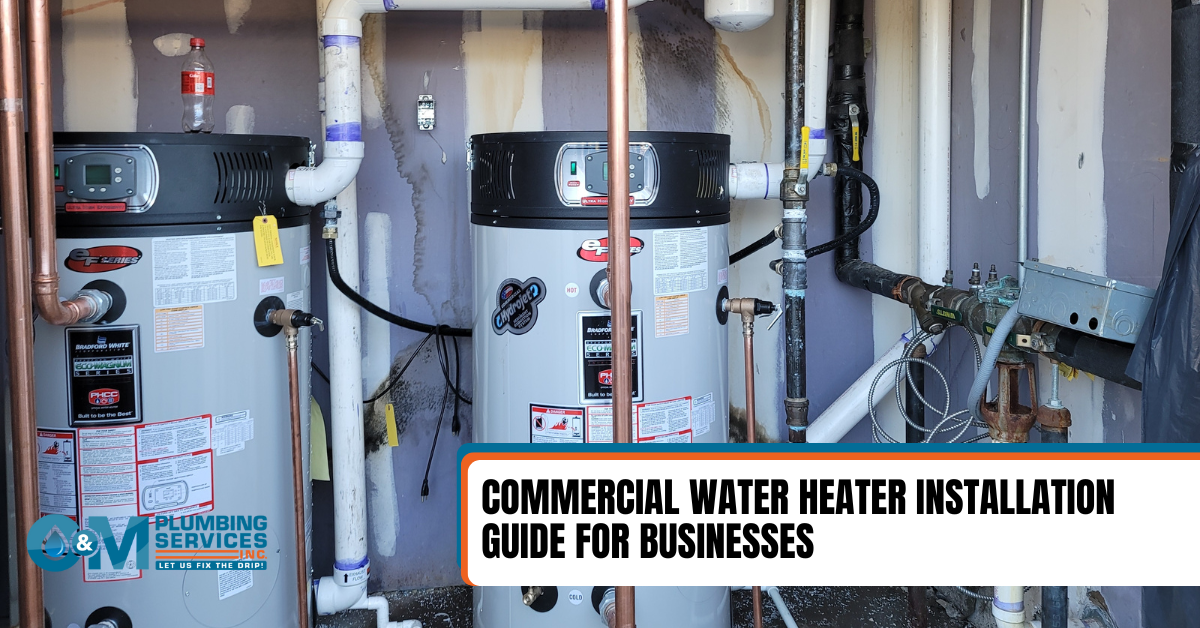
Commercial water heater installation involves a site assessment, selecting the appropriate size and type of system, removing the old unit, installing the new unit, and confirming compliance with local codes. Most projects take several hours, and repairs or replacements follow similar steps with added diagnostics.
Every business relies on hot water, yet most owners barely think about the system that powers it. That is fine until the water turns cold in the middle of a rush. Restaurants deal with dish piles and health code concerns. Gyms and salons hear about it from unhappy customers. Office buildings get calls from frustrated tenants. Hot water problems interrupt operations fast, and no one has time for that.
Commercial water heater installation is rarely as simple as rolling in a new tank and calling it a day. There are inspections, code requirements, clearance issues, fuel choices, venting needs, and the occasional surprise that shows up only after the old unit comes out. Business owners who know what to expect make better decisions and avoid downtime, so this guide outlines the entire process in a straightforward way.
Why Commercial Water Heaters Matter More Than Most People Realize
A commercial hot water system is not simply a bigger version of the one at home. These units supply continuous, heavy-demand hot water to entire buildings. Restaurants, warehouses, clinics, hotels, and retail spaces all depend on reliability. When hot water falters at home, it is annoying. When it falters in a business, it becomes a real operational problem.
That is why commercial water heater repair is not something to ignore. Early action usually costs less than emergency commercial water heater repair. Owners who keep an eye on their system tend to avoid those high-pressure situations.
Common Signs a Business Needs Installation or Repair
These warning signs often show up long before the water completely stops heating. They may seem small, but they rarely stay that way.
- Water that never reaches the proper temperature
- A drop in hot water capacity
- Rattling or knocking inside the tank
- Rust colored water
- Frequent burner or ignition problems
- Sudden spikes in utility bills
- Water is pooling near the base of the unit
When these symptoms show up in a commercial setting, it is time for a technician to determine whether repair or replacement makes the most sense.
How the Commercial Installation Process Works
Commercial installations require more planning than most owners expect. The process varies slightly depending on whether the building uses a tank, tankless, boiler-based, or large-capacity water-heating system, but the core workflow remains similar.
Inspection and Demand Evaluation
A technician begins by looking at how the business uses hot water. That involves the number of fixtures, peak hours, sink and appliance types, and any industry-specific rules. Restaurant water-heater installation requires strict sanitation standards. Medical facilities often need higher recovery rates. Industrial water heater repair can involve hefty usage.
This evaluation determines how powerful the new system must be.
Choosing the Right System
Once the load calculation is complete, the installer helps select the system type. Options include:
- Standard commercial tanks
- Tankless commercial water heater systems
- Gas commercial water heater installation
- High efficiency and hybrid setups
- Large capacity water heater installation
- Boiler-based systems for bigger facilities
Tankless units appeal to many businesses because they eliminate storage limits. Others prefer tank systems because they deliver a predictable output. There is no one-size solution.
Removing the Old Unit
This is often the part that owners underestimate. Older units may be full of sediment, extremely heavy, or installed in tight mechanical rooms. Cutting, draining, and maneuvering the old system out can take a surprising amount of labor.
Installing the New System
The new unit is secured, connected, and tested. The installer handles:
- Gas line adjustments
- Venting
- Electrical connections
- Water line upgrades
- Insulation
- Circulation pump configuration for larger spaces
Once everything is connected, the technician tests the system for temperature accuracy, safety controls, and overall performance.
Code Compliance
Commercial water heating systems must meet city and state requirements. That means proper venting, pressure relief protection, pan drainage, gas line sizing, and temperature control. Businesses cannot skip these steps because they prevent safety hazards.
Tankless commercial water heater installation is becoming more common, especially in buildings with fluctuating usage. Tankless arrays can produce endless hot water, and businesses appreciate the energy savings during downtime. The catch is that tankless setups often require upgraded gas lines, so costs vary.
Repair vs Replacement: How Owners Decide
Owners face a decision whenever a commercial system begins to fail. Repairing a younger unit is often cost-effective. Installing a new thermostat, replacing a valve, or fixing an ignition issue can add years to a vehicle’s life.
Replacement becomes the more intelligent choice when the unit is older than 10 years, the tank is weakened, or repeated failures occur. When a business finds itself searching for commercial water heater replacement near me more than once, the writing is on the wall.
Cost Factors That Influence Installation Pricing
There is no universal price because commercial systems vary widely. These are the factors that raise or lower the total cost.
- Tank versus tankless
- System capacity
- Gas or electric requirements
- Venting upgrades
- Age and removal difficulty of the old unit
- Circulation pump needs
- Emergency scheduling if the business is down
Simple replacements are faster. Complex retrofits take time.
Commercial Maintenance Keeps Systems Running Smoothly
A commercial water heater maintenance service plan is often the difference between steady operation and sudden emergencies. Maintenance typically includes:
- Flushing the tank
- Inspecting gas burners or elements
- Checking anode rods
- Verifying pressure relief valves
- Testing circulation pumps
- Confirming temperature consistency
- Inspecting plumbing connections
A well-maintained system lasts longer and uses less energy.
Mistakes Businesses Often Make
A few patterns keep popping up.
- Choosing a system that is too small
- Ignoring yearly maintenance
- Waiting for complete failure
- Skipping safety inspections
- Trying to save money with DIY fixes
- Delaying small repairs until they become major
Preventive care costs far less than lost business during a breakdown.
Frequently Asked Questions
How long does installation take in a commercial building?
Most standard replacements finish within a few hours. Larger or more complex installations can take most of the day.
Do tankless systems work for restaurants?
They can, but the business must size them correctly. Many restaurants still prefer gas tank systems because they recover quickly and handle heavy dish and cleaning cycles.
Is emergency commercial water heater repair available in Austin?
Yes. Many plumbing companies offer emergency service because businesses cannot operate without hot water.
Businesses around Austin, Pflugerville, Round Rock, Cedar Park, Hutto, Georgetown, and nearby communities depend on steady hot water every day. When your water heater begins to leak, the safest move is to bring in a licensed commercial plumbing team that handles installation, repair, and large-capacity systems. Call O and M Plumbing to schedule commercial water heater service or request an estimate for a new water heater installation for your commercial use.